



Discover our innovations and get to know the top new products for 2026!

Repetition accuracy is no substitute for process stability

There is a fundamental misconception about automated production processes: people expect that a precisely programmed robot will automatically deliver stable results. In practice, however, the opposite is often true.

Robots might offer extremely high repetition accuracy, but repetition accuracy alone isn’t enough to guarantee stable processes as the result doesn’t just depend on the robot’s movements, but the machining process as a whole. For this reason, anyone who wants to make their processes more stable must identify instability early on.

The process constantly changes

Robots might be precise, but they do not react intuitively to changes in the process. In contrast, production processes are dynamic: tools wear down, materials change, temperatures fluctuate, forces vary.

The aspects that experienced staff intuitively compensate for during manual machining processes must be specifically taken into account, controlled, or managed using stable process windows in automated applications.

The result? A supposedly precise process delivers inconsistent results.

The importance of influencing factors

A robot can execute a movement identically thousands of times. However, identical movements do not automatically lead to identical results. This is because the result isn’t just determined by the robot’s movements, but by the way in which multiple influencing factors interact.

Even minor changes to one of them can have a big impact on the overall result. Anyone who automates unstable processes will only end up automating instability.

*By entering your e-mail address, you agree that your details will be stored by PFERD TOOLS in order to send you our exclusive white paper free of charge. Your data will never be passed on to third parties. You can unsubscribe from the newsletter at any time with immediate effect.

Recognizing tell-tale warning signs

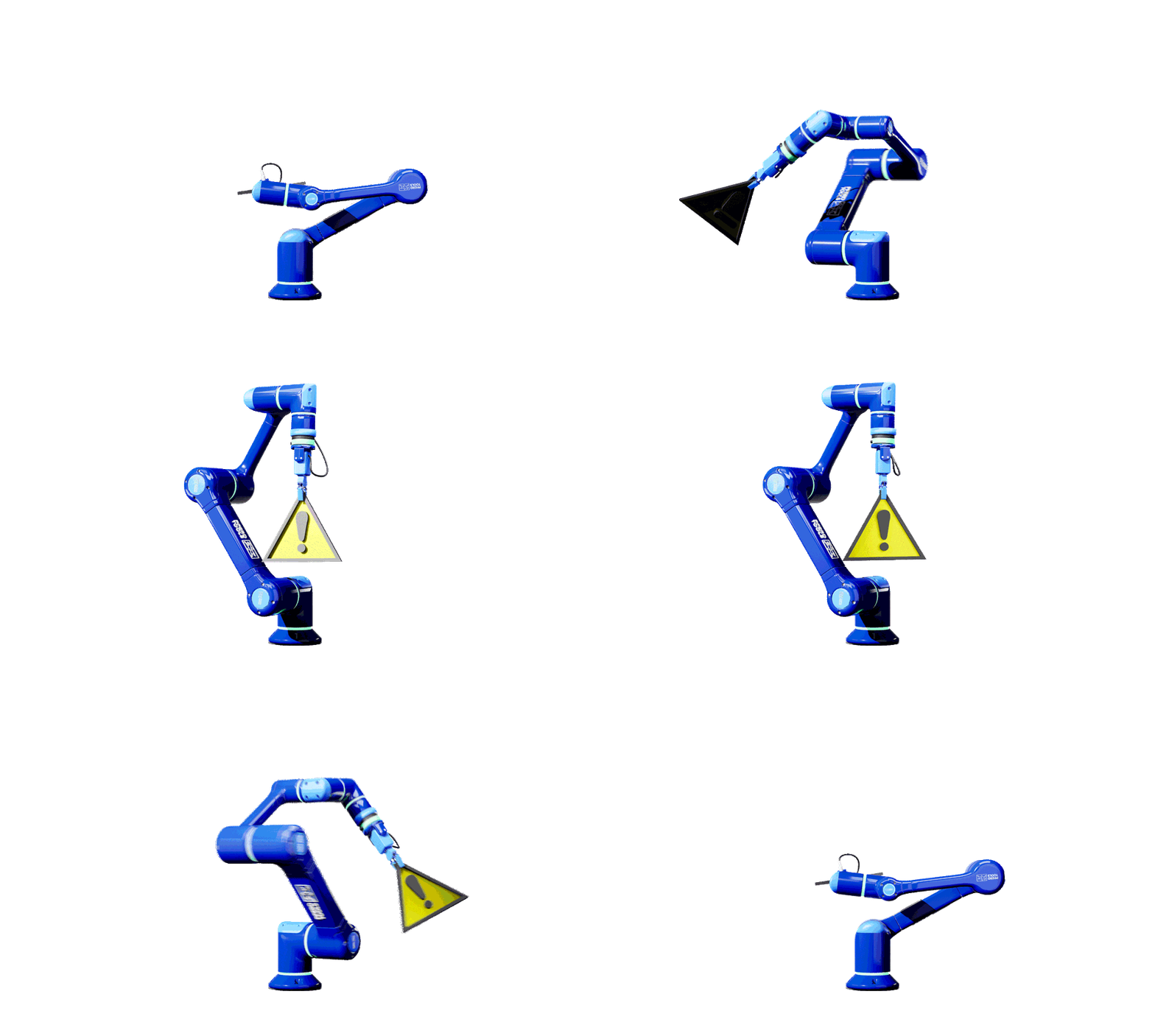
Unstable robotics processes rarely become apparent straight away. In many cases they manifest themselves in symptoms which people initially attribute to other things. However, they are the first warning signs indicating that the process itself isn’t stable enough.

Did you know that the following symptoms already count as warning signs?

  • Inconsistent surface quality despite the use of robots.
  • Waste produced without a clearly identifiable cause.
  • Need for reworking even though an automated solution is being used.
  • Frequent need to manually adjust parameters.
  • Decreasing tool life.
  • Uncertainty if the process changes.

Stable processes are created systematically – not by chance

Stable robotics workflows are created from a systematic understanding of the machining process. The robot alone does not determine the quality and efficiency of the process – the key thing is how the following factors interact with one another:

  • Material and application
  • Forces in the process
  • Drive technology
  • Tool properties
  • Wear

For production and process managers, this means that the key to stability lies in knowing and managing influencing factors, understanding interactions, and defining the limits of the process.

PFERD TOOLS Newsletter subscription

Register here free of charge for our PFERD TOOLS newsletter and receive all the latest news on products, services and promotions from the world of PFERD TOOLS on a regular basis.